Introduction
Digital radiography (DR) replaces film with digital sensors. This allows instant imaging, faster diagnoses, and better image quality. DR is widely used for its efficiency and accuracy.
In this article, we will explore how digital radiography works, its key components, and the advantages over traditional systems. Learn more about our products at Dawei.

Understanding Digital Radiography Technology
What is Digital Radiography?
Digital radiography is an advanced method of X-ray imaging where digital sensors replace traditional photographic film to capture images. The images are immediately transferred to a computer for processing and analysis. Compared to film-based systems, digital radiography offers quicker results with better image quality. This technology enables healthcare providers to view, manipulate, and enhance images almost instantly, leading to improved diagnostic accuracy and better patient care.
Key Components of a Digital Radiography System
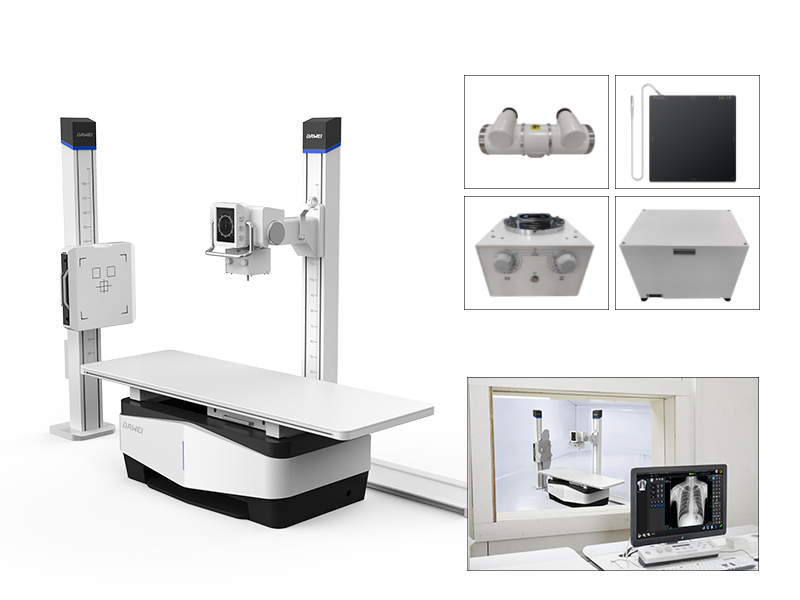
A digital radiography system is made up of several key components that work together to capture and process X-ray images efficiently:
● Digital Sensors: These sensors are the core of digital radiography systems, replacing traditional X-ray film. They can be either flat-panel detectors or charge-coupled devices (CCDs), which convert X-ray photons into digital signals.
● Image Processing Software: This software enhances the captured images by adjusting brightness, contrast, and clarity. It allows healthcare providers to zoom in on specific areas, adjust image details, and highlight abnormalities for better diagnosis.
● Display System: Once processed, the images are displayed on high-resolution monitors, enabling radiologists and doctors to review and analyze the data. The system’s ability to manipulate the images post-capture makes it an effective tool for precise diagnostics.
How Does the Digital X-ray Machine Capture Images?
Digital radiography machines capture X-ray images through a multi-step process:
1. X-ray Exposure: The machine emits X-rays that pass through the patient’s body, interacting with internal structures like bones and soft tissues. Denser structures absorb more X-rays, while softer tissues allow more to pass through.
2. Detection: The digital sensors capture the X-ray data. These sensors, such as flat-panel detectors or CCDs, store the data in a digital format.
3. Conversion: The X-ray data captured by the sensors is converted into electrical signals. These signals are transmitted to a computer for processing.
4. Image Creation: The electrical signals are processed by the system’s image software, which creates a clear digital image. This image is displayed immediately for review.
This process occurs almost instantaneously, providing a significant improvement over traditional film-based X-rays, where the images would need to be developed before they could be analyzed. This rapid processing allows for quicker diagnosis and more efficient care.

Types of Digital Radiography Systems
Direct Digital Radiography (DR)
Direct digital radiography (DR) is the most advanced form of digital radiography. It uses flat-panel detectors to capture X-ray images directly and convert them into digital images in real time. This system allows for faster image acquisition, eliminating the need for intermediate steps such as film development or scanning. The ability to capture and display images almost instantly greatly improves workflow in healthcare settings, especially in busy environments like emergency rooms.
Advantages of DR
● Instant Image Availability: DR provides immediate access to images, speeding up diagnosis and treatment. This reduces patient wait times and ensures quicker decision-making.
● High-Resolution Imaging: The quality of DR images is superior, with clearer, more detailed results compared to traditional X-rays. This enables radiologists to identify issues more accurately.
● Lower Radiation Exposure: DR uses a lower radiation dose while still providing high-quality images, which helps minimize the patient’s exposure to radiation during the imaging process.
Indirect Digital Radiography (CR)
Computed radiography (CR) is another form of digital radiography, though it operates differently than DR. CR systems use a photostimulable phosphor plate to capture X-ray images. After exposure, the phosphor plate is scanned by a reader to convert it into digital images. This indirect system is typically slower than DR due to the scanning step, but it still offers digital image quality that surpasses traditional film-based radiography.
Advantages of CR
● Lower Initial Cost: CR systems are generally less expensive than DR systems, making them a more affordable option for some healthcare providers. This can be particularly advantageous for small clinics or facilities with budget constraints.
● Compatibility with Existing Equipment: CR systems can often be used with existing X-ray machines, making them easier to implement in facilities that already have traditional X-ray setups. This provides a cost-effective pathway for upgrading to digital radiography without completely replacing existing equipment.
While DR systems offer faster image acquisition and superior resolution, CR remains a reliable and more budget-friendly option for healthcare providers transitioning to digital radiography.
Comparison of DR vs. CR
Feature | Direct Digital Radiography (DR) | Computed Radiography (CR) |
Image Capture | Direct capture by digital detector | Uses photostimulable phosphor plates |
Image Processing Speed | Instant | Requires scanning and processing |
Image Quality | Higher resolution | Good but lower than DR |
Radiation Dose | Lower radiation exposure | Moderate radiation exposure |
Cost | Higher initial cost | Lower initial cost |
How Does Digital Radiography Work?
X-ray Generation and Exposure
In digital radiography, the process begins when the patient is exposed to an X-ray beam. The X-rays pass through the body, interacting with internal structures such as bones and tissues. Denser materials like bones absorb more X-rays, while softer tissues, being less dense, allow more X-rays to pass through. This variation in absorption helps to create an image that represents the different densities of the body’s internal structures.
Detection and Image Conversion
The digital sensor captures the X-ray data as it passes through the patient's body. The sensor, which could be a flat-panel detector or a charge-coupled device (CCD), converts the X-ray data into electrical signals. These signals are then transmitted to a computer, where they are processed to create an image. The conversion process allows for high-quality digital imaging, ensuring that the final image is clear and detailed.
Image Processing and Display
Once the data is captured, image processing software enhances the image to improve its clarity, contrast, and brightness. This step helps to ensure that the images are not only accurate but also optimized for diagnosis. The final processed image is then displayed on a monitor, making it available for immediate review by radiologists or healthcare providers. This fast display of images is crucial for making quick decisions in clinical settings.
Real-Time Imaging
One of the main advantages of digital radiography is the ability to view images in real time. Unlike traditional film-based methods, which require development time, digital radiography allows healthcare providers to see the images instantly. This real-time imaging enables immediate decision-making, allowing doctors and radiologists to adjust procedures as necessary, reducing the time spent waiting for results and improving patient care.
Advantages of Digital Radiography
Faster Imaging and Diagnosis
Digital radiography significantly accelerates both the imaging process and the diagnosis. Since the images are immediately available, healthcare providers can make quicker decisions, leading to faster treatments for patients. This speed is especially important in emergency situations where time is critical for successful outcomes.
Improved Image Quality
Compared to traditional X-ray methods, digital radiography produces clearer and more detailed images. The ability to manipulate the images—such as adjusting contrast, brightness, and zooming in on specific areas—allows radiologists to detect even the smallest abnormalities. This enhanced image quality improves the accuracy of diagnoses.
Reduced Radiation Exposure
Digital radiography uses less radiation to produce high-quality images, making it a safer option for both patients and medical staff. The reduction in radiation exposure is particularly important in pediatric and geriatric care, where minimizing radiation risk is critical. This technology helps ensure that patients are not exposed to unnecessary radiation while still obtaining accurate diagnostic results.
Easier Image Storage and Sharing
One of the major advantages of digital radiography is the ease of image storage and sharing. Digital images can be stored electronically and shared across healthcare networks, eliminating the need for physical storage like film. This reduces the risk of image loss and enhances collaboration between medical professionals, enabling quicker diagnoses and better patient care across different facilities.
Benefit | Digital Radiography | Traditional X-ray |
Speed of Results | Instant image display | Takes time to develop film |
Image Quality | High resolution, detailed images | Limited resolution and detail |
Radiation Exposure | Lower radiation dose | Higher radiation dose |
Environmental Impact | No chemicals, eco-friendly | Requires chemicals for development |
Storage and Accessibility | Easy to store and share digitally | Requires physical storage |
Applications of Digital Radiography
Medical Applications
Digital radiography is commonly used in hospitals and clinics for diagnostic imaging, including chest X-rays, bone scans, and abdominal imaging. It is particularly valuable in emergency rooms, where quick decision-making is critical.
Non-Medical Applications
Aside from healthcare, digital radiography also has applications in industrial fields, such as material testing, quality control in manufacturing, and inspection of pipelines for corrosion or damage.
Dental and Orthopedic Imaging
Digital radiography plays an essential role in dental and orthopedic imaging, providing high-resolution images that help diagnose fractures, tooth decay, and other conditions with greater precision.
Digital Radiography vs Traditional X-ray Systems
Image Quality Comparison
Digital radiography produces superior image quality compared to traditional X-ray systems. With higher resolution and greater clarity, digital systems make it easier to detect abnormalities such as fractures, tumors, and infections. The ability to adjust contrast, zoom in, and manipulate images in real-time further enhances diagnostic precision, something traditional X-rays cannot match.
Efficiency and Workflow
Digital radiography greatly improves efficiency by eliminating the need for time-consuming film processing. Images are available instantly, allowing for immediate analysis and faster diagnoses. This streamlines the entire workflow, reducing patient wait times and allowing healthcare providers to make quicker decisions. In comparison, traditional X-ray systems require physical film development, which can delay diagnosis and treatment.
Cost Comparison
Although digital radiography systems may have a higher initial cost than traditional X-ray machines, they offer significant long-term savings. These systems eliminate the need for film, chemicals, and the associated storage costs. Additionally, digital radiography improves workflow and diagnostic efficiency, leading to higher overall productivity. Over time, these savings often outweigh the initial investment, making digital systems a more cost-effective option in the long run.
Future Trends in Digital Radiography
Advancements in Image Processing
The future of digital radiography looks promising with advancements in image processing technologies. Emerging technologies like artificial intelligence (AI) and machine learning are enhancing the accuracy and speed of digital X-ray machines. AI algorithms can automatically detect anomalies such as fractures or tumors in images, allowing for faster diagnosis. These advancements are also enabling real-time analysis and decision-making, further improving the efficiency and reliability of diagnostic processes.
Wireless and Portable DR Systems
Wireless digital radiography systems are gaining popularity, offering flexibility for bedside imaging or in emergency and critical care settings. These portable systems enable quick and accurate imaging without the need for large, stationary equipment. The mobility of wireless DR systems is a game-changer in situations where immediate access to imaging is critical, such as trauma centers or remote areas.
Integration with Other Medical Systems
Another significant trend is the growing integration of digital radiography systems with electronic health record (EHR) systems. This integration allows for seamless sharing of images and patient data across different departments and healthcare providers. It enhances collaboration, improves patient care, and ensures that diagnostic information is easily accessible when needed. With such integrations, healthcare facilities can offer more coordinated and efficient care.
Conclusion
Digital radiography X-ray machines are transforming medical imaging. They offer faster, clearer, and safer imaging, improving diagnosis speed and accuracy. As technology advances, these systems will further enhance patient care and diagnostic capabilities. Products from Dawei offer reliable, high-quality solutions, ensuring efficient and accurate results in healthcare settings.
FAQ
Q: What is a digital radiography X-ray machine?
A: A digital radiography X-ray machine uses digital sensors to capture X-ray images, providing faster, clearer, and safer imaging compared to traditional film-based systems.
Q: How does a digital radiography machine work?
A: The machine emits X-rays, which are captured by digital sensors, converted into electrical signals, and processed into clear digital images displayed on a monitor.
Q: What are the advantages of using digital radiography over traditional X-ray systems?
A: Digital radiography offers instant image results, higher resolution, reduced radiation exposure, and easier image storage and sharing compared to traditional X-ray systems.
Q: Why should healthcare providers switch to digital radiography?
A: Digital radiography enhances diagnostic accuracy, speeds up the imaging process, and reduces radiation exposure, making it a valuable tool for modern healthcare providers.